

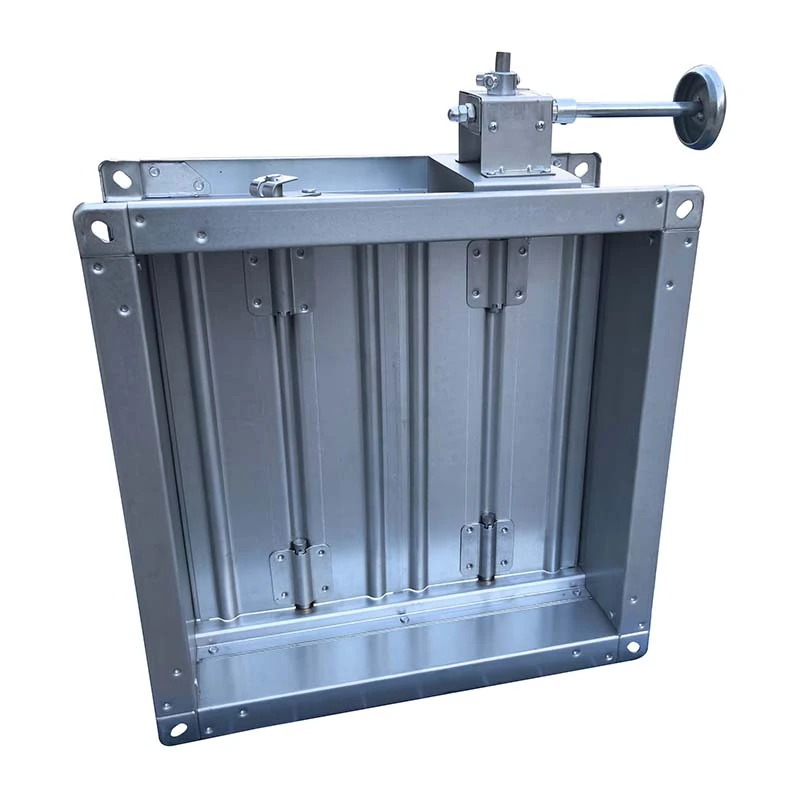
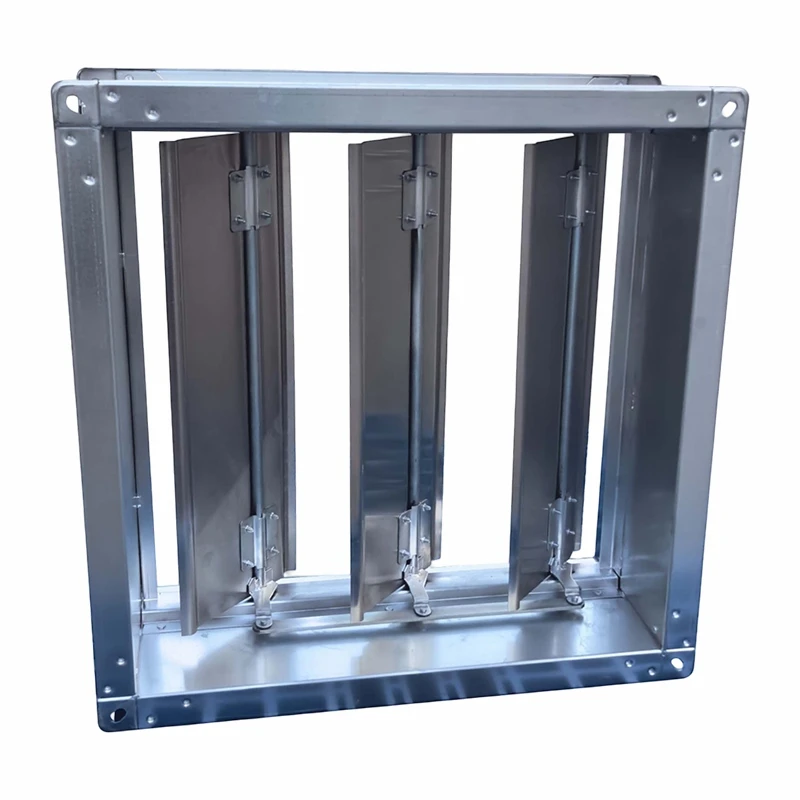
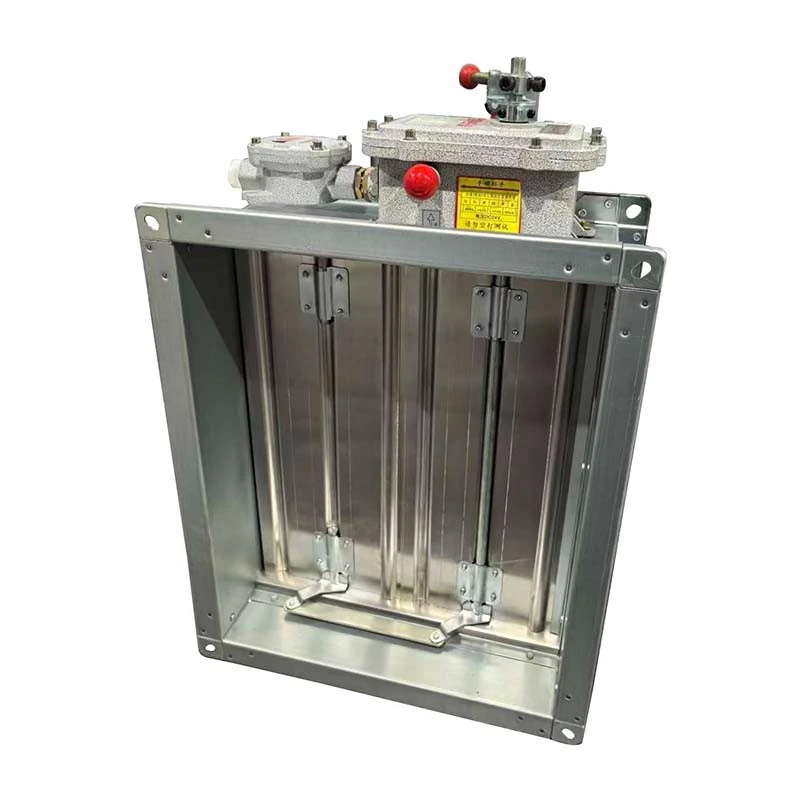
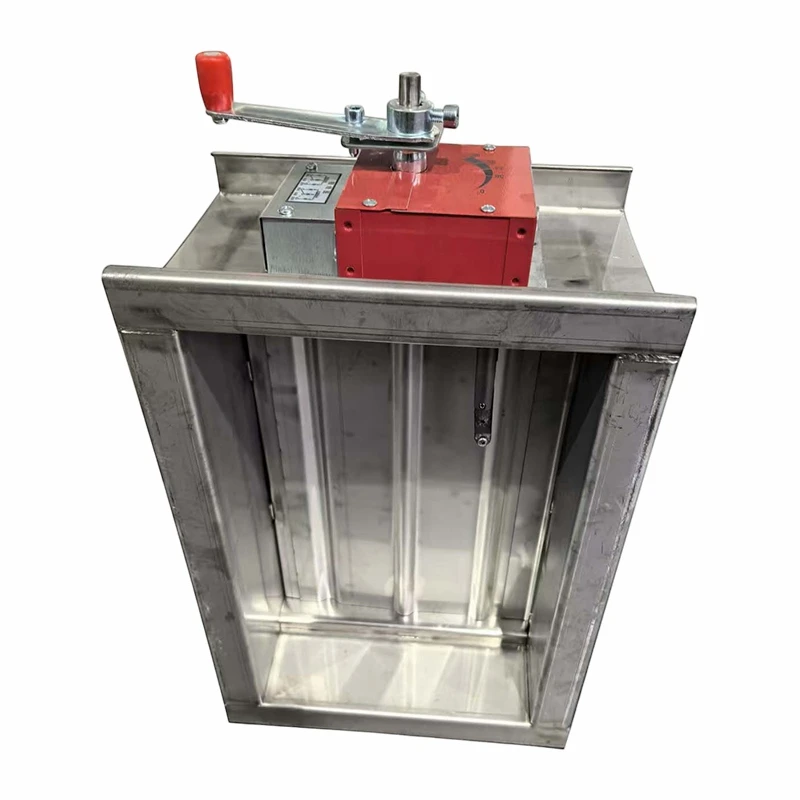
Fire dampers are essential safety components built into the ductwork of commercial and residential ventilation and air conditioning systems. Designed to remain open under normal conditions, they allow unobstructed airflow for heating, cooling, and air exchange. When a fire breaks out and smoke temperatures rise to 70°C, a built-in thermal fuse triggers the damper, closing its metal blades to seal the duct. This simple yet effective mechanism blocks flames, smoke, and toxic gases from spreading between building zones, containing the fire to its origin and buying critical time for evacuation and firefighting. Fire dampers are typically constructed from galvanized steel, a material chosen for its heat resistance and durability, ensuring they can withstand the high temperatures of a fire without warping or failing prematurely. In the construction and HVAC industries, compliance with safety codes is non-negotiable, and fire dampers play a key role in meeting these regulations. Building codes worldwide require the installation of these devices in ducts that pass through fire-rated walls, floors, and ceilings, as unprotected ductwork can act as a hidden path for fire to spread rapidly. Unlike smoke dampers, which primarily block smoke movement, fire dampers are specifically engineered to resist heat and flames, making them a critical line of defense against structural fire spread. Regular maintenance, including visual inspections and functional testing, is required to ensure fire dampers operate correctly during an emergency. Over time, dust buildup, rust, or mechanical wear can jam the damper blades, so cleaning and lubricating moving parts, as well as replacing thermal fuses as needed, are essential to keeping these life-saving devices ready to perform when needed.
How Do Fire Dampers Protect Buildings from Fire Spread Through Ventilation Systems?


Send Inquiry