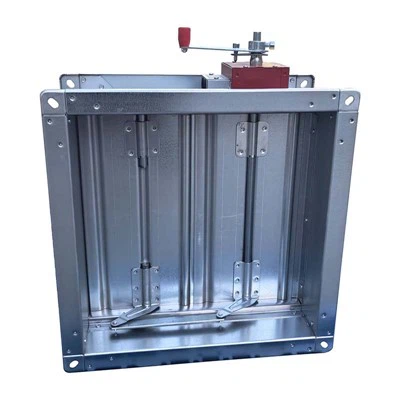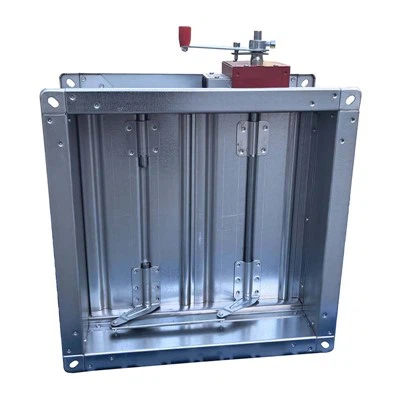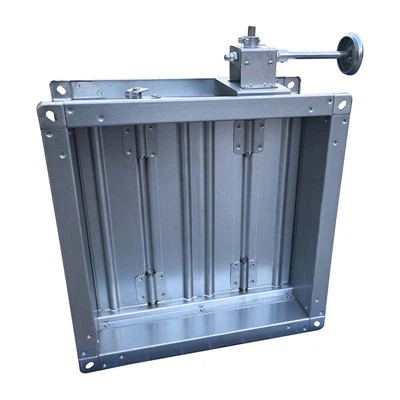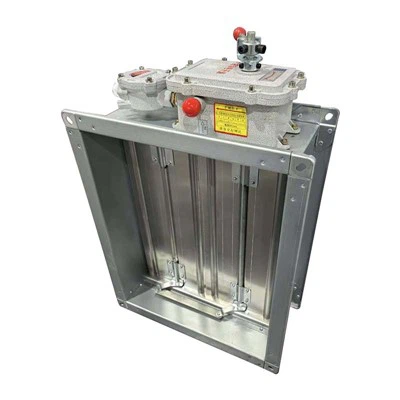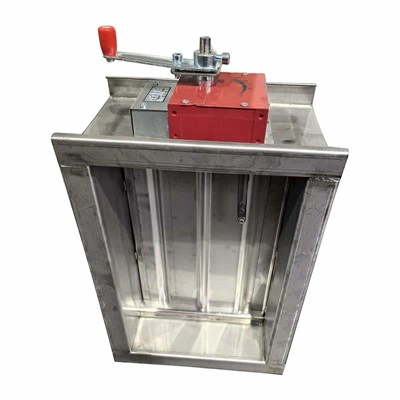
The air vent manufacturing process is a systematic operational chain encompassing raw material preparation, forming and processing, surface treatment, assembly and testing, and packaging and warehousing. The precision control and quality inspection at each stage directly determine the performance, appearance, and lifespan of the final product.
Production begins with raw material selection and pretreatment. Commonly used base materials include aluminum alloy profiles, cold-rolled steel sheets, and engineering plastics. The grade, thickness, and mechanical properties must be verified according to design specifications. Aluminum alloys require aging treatment to improve strength, while steel sheets need leveling and deburring to ensure flatness and dimensional accuracy in subsequent processing. For air vents used in special environments, pre-testing of material corrosion resistance or antibacterial properties is also required.
Then comes the forming and processing stage. Metal air vents typically use CNC shearing, punching, bending, and welding processes to process the sheet metal into frames, blades, and mounting edges. Bending angles and hole positions must be strictly controlled according to drawing tolerances. Welded areas must be uniform and full, without incomplete welds or missing welds, and the surface must be polished to a smooth finish to avoid sharp edges and airflow disturbance. Plastic air vents are injection molded, requiring stable mold temperature, injection pressure, and cooling rate to prevent shrinkage marks, warping, and dimensional deviations.
Surface treatment is crucial for improving weather resistance and aesthetics. Metal air vents undergo degreasing, pickling, and phosphating, followed by electrostatic powder coating or electrophoretic coating. Coating thickness and adhesion must meet relevant standards, and salt spray testing verifies corrosion resistance. Plastic air vents undergo UV-resistant and flame-retardant modification to ensure they do not age or deform under long-term exposure to sunlight or high temperatures.
In the assembly stage, the pre-fabricated frames, blades, air guides, and adjustment mechanisms are assembled according to the process documents, using specialized fasteners to ensure smooth rotation and prevent loosening. For adjustable air vents, the smoothness of blade angle adjustment and positioning reliability must be checked.
Finally, functional and appearance inspections are conducted, including dimensional verification, airflow testing, noise measurement, and surface quality inspection. Only qualified products are packaged with shockproof and moisture-proof measures, accompanied by product identification and a certificate of conformity, before entering warehousing and shipping.
The entire process revolves around standardized operations and process inspection. Through the close connection of each process, it ensures that the air outlet products are structurally sound, reliable in performance, and aesthetically pleasing, providing high-quality terminal control components for building ventilation and air conditioning systems.