
What is the power output of axial flow fans?
As a supplier of axial flow fans, I've had the privilege of witnessing firsthand the diverse applications and capabilities of these remarkable devices. Axial flow fans are a staple in numerous industries, from ventilation systems in large commercial buildings to cooling mechanisms in industrial machinery. Understanding their power output is crucial for selecting the right fan for a specific application, ensuring optimal performance and energy efficiency.
Defining Power Output in Axial Flow Fans
The power output of an axial flow fan refers to the amount of mechanical energy the fan can convert from electrical energy to move air. It is typically measured in watts (W) or horsepower (hp). This power output is a key factor in determining the fan's ability to generate airflow and overcome resistance in a given system.
Several factors influence the power output of an axial flow fan. The size of the fan, specifically the diameter of the impeller, plays a significant role. Larger impellers generally have a higher power output as they can move more air per revolution. The blade design is also crucial. Blades with a more efficient aerodynamic shape can convert more electrical energy into airflow, resulting in a higher power output.
The speed of the fan, measured in revolutions per minute (RPM), is another important factor. Higher RPMs generally lead to a higher power output, as the fan can move more air in a given time. However, increasing the RPM also increases the power consumption and can lead to higher noise levels.

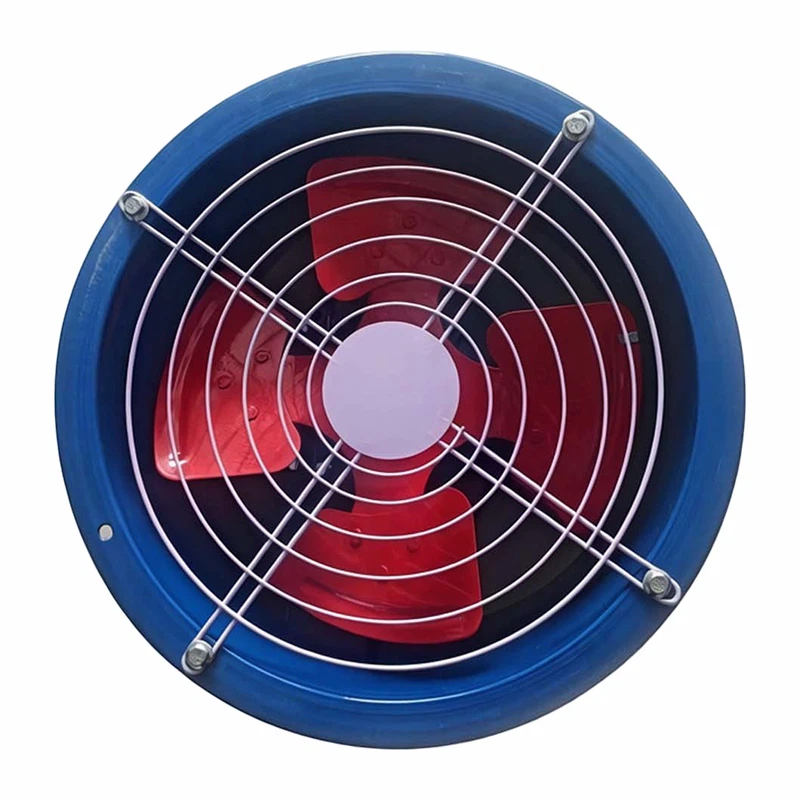
Calculating Power Output
The power output of an axial flow fan can be calculated using the following formula:
[P = \frac{Q \times \Delta P}{\eta}]
Where:
- (P) is the power output in watts (W)
- (Q) is the volumetric flow rate in cubic meters per second (m³/s)
- (\Delta P) is the pressure difference across the fan in pascals (Pa)
- (\eta) is the efficiency of the fan
The volumetric flow rate (Q) represents the volume of air the fan can move per unit of time. It is typically measured in cubic meters per hour (m³/h) or cubic feet per minute (CFM). The pressure difference (\Delta P) is the difference in pressure between the inlet and outlet of the fan. It is a measure of the fan's ability to overcome resistance in the system.
The efficiency (\eta) of the fan is a measure of how effectively the fan converts electrical energy into airflow. It is expressed as a percentage and is typically in the range of 50% to 80%. A higher efficiency means that the fan can produce more airflow with less power consumption.
Importance of Power Output in Different Applications
The power output of an axial flow fan is crucial in determining its suitability for different applications. In ventilation systems, for example, a fan with a high power output is required to ensure adequate airflow and ventilation in large spaces. This is particularly important in buildings where the air quality needs to be maintained, such as hospitals, schools, and offices.
In industrial applications, axial flow fans are often used for cooling purposes. A fan with a high power output can effectively remove heat from machinery and equipment, preventing overheating and ensuring optimal performance. For example, in a data center, axial flow fans are used to cool servers and other electronic components. A fan with a high power output can maintain a stable temperature, reducing the risk of equipment failure and downtime.
In the agricultural sector, axial flow fans are used for ventilation in greenhouses and livestock buildings. A fan with the appropriate power output can ensure proper air circulation, maintaining a healthy environment for plants and animals.
Our Product Range and Power Output
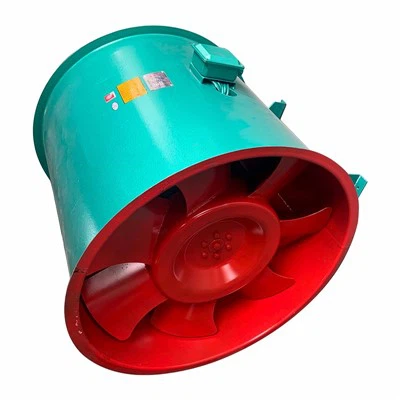
As a supplier of axial flow fans, we offer a wide range of products with different power outputs to meet the diverse needs of our customers. Our Fan Axial Flow series is designed for general ventilation applications. These fans are available in various sizes and power ratings, allowing customers to choose the fan that best suits their specific requirements.
Our High Temp Duct Fan is specifically designed for applications where high temperatures are involved. These fans are capable of withstanding high temperatures and have a high power output to ensure efficient airflow in challenging environments.
Our Axial Flow Extractor Fan is ideal for removing stale air and odors from enclosed spaces. These fans have a high power output and are designed to be energy-efficient, making them a cost-effective solution for ventilation.
Selecting the Right Fan Based on Power Output
When selecting an axial flow fan, it is important to consider the power output in relation to the specific application. Here are some steps to help you choose the right fan:
- Determine the required airflow: Calculate the volume of air that needs to be moved in the space. This will depend on the size of the space, the number of occupants, and the specific requirements of the application.
- Consider the pressure requirements: Determine the pressure difference that the fan needs to overcome. This will depend on the resistance in the system, such as ductwork, filters, and other components.
- Choose the appropriate power output: Based on the required airflow and pressure, select a fan with a power output that can meet these requirements. It is important to choose a fan that is not too large or too small, as this can lead to inefficiencies and increased energy consumption.
- Consider the efficiency: Look for a fan with a high efficiency to ensure that it can produce the required airflow with less power consumption. This will not only save energy but also reduce operating costs.
Contact Us for Your Axial Flow Fan Needs
If you are in the market for an axial flow fan, we are here to help. Our team of experts can assist you in selecting the right fan based on your specific requirements. We offer a wide range of products with different power outputs, ensuring that you can find the perfect fan for your application.
Whether you need a fan for ventilation, cooling, or any other application, we have the solution. Contact us today to discuss your needs and start the procurement process. We look forward to working with you to provide the best axial flow fan solutions for your business.
References
- ASHRAE Handbook - Fundamentals. American Society of Heating, Refrigerating and Air-Conditioning Engineers.
- Fan Engineering, 9th Edition. Buffalo Forge Company.
- Industrial Ventilation: A Manual of Recommended Practice, 29th Edition. American Conference of Governmental Industrial Hygienists.