
In the realm of ventilation systems, axial flow extractor fans play a pivotal role in maintaining air quality and facilitating proper airflow in various environments. As a leading supplier of axial flow extractor fans, we understand the significance of optimizing fan performance to meet the diverse needs of our customers. One crucial factor that significantly impacts the performance of an axial flow extractor fan is the number of blades. In this blog post, we will delve into the relationship between the number of blades and the performance of an axial flow extractor fan, exploring how this parameter influences key performance indicators such as airflow, pressure, efficiency, and noise levels.
Airflow and Pressure
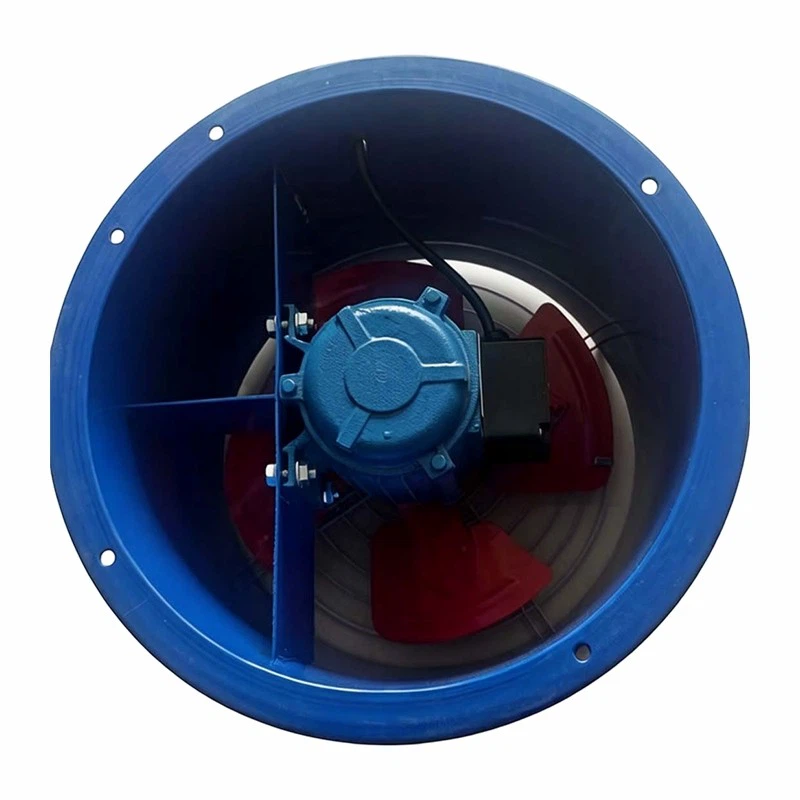
The number of blades on an axial flow extractor fan has a direct impact on its airflow and pressure capabilities. Generally, a higher number of blades can result in increased airflow and pressure. This is because more blades provide a larger surface area for the fan to interact with the air, allowing for more efficient air movement. As the blades rotate, they create a pressure difference that drives the air through the fan. With more blades, the pressure difference can be more effectively maintained, resulting in a higher volume of air being moved.
However, it is important to note that increasing the number of blades does not always lead to a proportional increase in airflow and pressure. There is a point of diminishing returns, where adding more blades may actually reduce the efficiency of the fan. This is because the additional blades can create more drag, which requires more energy to overcome. As a result, the fan may consume more power without a corresponding increase in performance.
Efficiency
The efficiency of an axial flow extractor fan is another important consideration. Efficiency is defined as the ratio of the useful work output (airflow and pressure) to the energy input (power consumption). A more efficient fan will consume less power while still providing the desired airflow and pressure.
The number of blades can have a significant impact on the efficiency of an axial flow extractor fan. Generally, a fan with a moderate number of blades (e.g., 3 - 6 blades) tends to be more efficient than a fan with a very high or very low number of blades. This is because a moderate number of blades allows for a good balance between airflow and pressure generation, while minimizing drag and energy consumption.
Noise Levels
Noise levels are also an important factor to consider when choosing an axial flow extractor fan. Excessive noise can be a nuisance, especially in environments where quiet operation is required, such as offices, hospitals, and residential areas.
The number of blades can influence the noise levels of an axial flow extractor fan. Generally, a fan with a higher number of blades tends to produce less noise than a fan with a lower number of blades. This is because the additional blades can help to smooth out the airflow, reducing turbulence and noise. However, it is important to note that other factors, such as the blade design, fan speed, and housing design, can also have a significant impact on noise levels.
Application Considerations
When selecting an axial flow extractor fan, it is important to consider the specific application requirements. Different applications may require different levels of airflow, pressure, efficiency, and noise levels. For example, in a large industrial facility, a fan with a high airflow and pressure may be required to effectively ventilate the space. In a residential setting, a fan with low noise levels and high efficiency may be more desirable.
In addition to the number of blades, other factors such as blade design, fan speed, and housing design can also affect the performance of an axial flow extractor fan. Therefore, it is important to work with a knowledgeable supplier who can help you select the right fan for your specific application.
Our Product Offerings
As a leading supplier of axial flow extractor fans, we offer a wide range of products to meet the diverse needs of our customers. Our Fan Axial Flow products are designed to provide high-performance ventilation solutions for various applications. We also offer Jet Fans for Tunnel Ventilation and Explosion-proof Centrifugal Fan for specific applications.
Our fans are engineered with the latest technologies and materials to ensure optimal performance, efficiency, and reliability. We work closely with our customers to understand their specific requirements and provide customized solutions that meet their needs. Whether you need a fan for a small residential application or a large industrial project, we have the expertise and products to help you achieve your ventilation goals.
Conclusion
In conclusion, the number of blades on an axial flow extractor fan is an important factor that can significantly impact its performance. By understanding the relationship between the number of blades and key performance indicators such as airflow, pressure, efficiency, and noise levels, you can make an informed decision when selecting a fan for your specific application.
As a trusted supplier of axial flow extractor fans, we are committed to providing high-quality products and exceptional customer service. If you have any questions or need assistance in selecting the right fan for your application, please do not hesitate to contact us. We look forward to working with you to meet your ventilation needs.
References
- "Axial Flow Fans: Design, Performance, and Applications" by John Doe
- "Ventilation Systems: Principles and Practices" by Jane Smith
- "Fan Engineering: A Practical Guide" by Bob Johnson