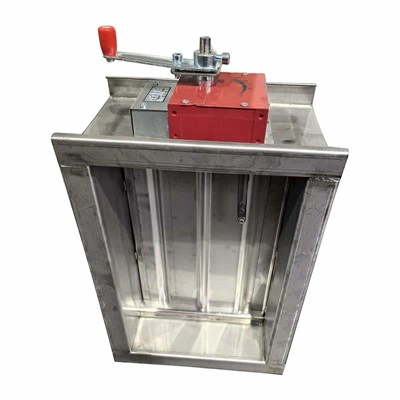
Micro-perforated plate silencers occupy an important position in industrial and civil noise control due to their unique acoustic structure and excellent durability. The material selection of its core component-the micro-perforated plate-directly affects the product's service life, corrosion resistance, and acoustic performance stability. This article will analyze this from three aspects: material type, performance characteristics, and selection principles.
The most commonly used material is high-quality low-carbon steel plate. This type of plate has good machinability, enabling precision machining with micron-level pore sizes and high perforation rates. Low-carbon steel is relatively inexpensive and suitable for ventilation and air conditioning systems in normal temperature and dry environments. However, in humid or corrosive gas conditions, exposed steel plates are susceptible to oxidation and corrosion, therefore, galvanizing or spraying for corrosion protection is often required to extend service life.
Stainless steel is the preferred material for harsh environments. Austenitic stainless steel (such as 304 and 316L) combines high strength with excellent corrosion resistance, maintaining structural stability under conditions of high temperature, high humidity, salt spray, or acidic gases. 316L stainless steel, containing molybdenum, has even stronger resistance to pitting corrosion, making it suitable for extreme environments such as marine climates or chemical plants. Although stainless steel raw materials are more expensive, its maintenance-free nature and long lifespan reduce total lifespan costs.
Aluminum alloys are known for their lightweight advantage. With a density approximately one-third that of steel, they facilitate weight reduction in equipment, making them suitable for weight-sensitive ceiling ventilation systems or silencers for mobile equipment. Aluminum alloys have good thermal conductivity and oxidation resistance, but they soften easily in alkaline environments or at high temperatures; therefore, the applicable temperature range must be strictly limited when selecting materials. To improve wear resistance and corrosion resistance, the surface can be anodized or electrostatically powder-coated.
For specific high-temperature conditions, heat-resistant alloy steels or nickel-based alloys can be selected. These materials can withstand flue gas temperatures above 600°C while maintaining stable mechanical properties and perforation shapes. For example, in gas turbine exhaust systems, high temperatures cause a sharp decline in the strength of ordinary steel, while heat-resistant alloys can maintain the integrity of the micro-perforated structure, ensuring that acoustic performance does not degrade due to thermal creep.
In addition to the aforementioned metallic materials, composite materials are also beginning to be used in special applications. For instance, in highly corrosive environments requiring insulation, a structure combining a glass fiber reinforced plastic (FRP) substrate with a perforated metal layer can be used. These materials combine lightweight, corrosion resistance, and insulation properties, but processing precision and high-temperature resistance remain technical challenges.
Material selection requires comprehensive consideration of factors such as operating environment temperature, humidity, media corrosivity, structural load-bearing requirements, and economic efficiency. Generally, low-carbon galvanized steel sheets are suitable for ambient temperature clean air systems; stainless steel is preferable for humid or mildly corrosive environments; aluminum alloys are preferred for lightweight applications; and heat-resistant alloys are necessary for high-temperature flue gas environments. A reasonable combination of materials not only ensures the long-term reliable acoustic performance of the micro-perforated plate silencer but also significantly reduces maintenance costs and safety risks.