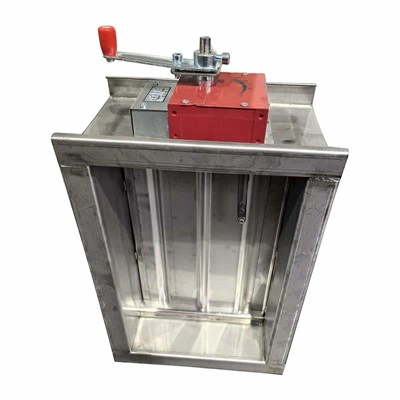
The practicality of air vents lies not only in their basic function as the terminal unit of a ventilation and air conditioning system, but also in their systematic contribution to comfort, energy efficiency, and maintenance costs in real-world operating environments. Excellent air vent design and application can achieve precise airflow organization in complex spaces, balancing air quality and energy-saving goals, creating tangible value for building users and operators.
Firstly, air vents have a direct and significant practical effect on improving indoor environmental comfort. By rationally selecting the air supply form and placement, hot and cold air can be evenly distributed, avoiding direct airflow that causes discomfort, while eliminating temperature stratification and dead air zones. For example, using strip air vents with swirl blades in office areas can reduce the feeling of drafts and improve the uniformity of the temperature field; in high-ceilinged spaces such as shopping malls, layered air supply combined with directional nozzles can maintain suitable airflow speed and temperature in the ground area, enhancing the customer experience.
Secondly, air vents play a crucial role in improving system energy efficiency. Proper selection and placement of air vents can reduce system operating resistance and fan energy consumption. By optimizing airflow velocity and range, and avoiding excessive air supply and short-circuit recirculation, the total air volume requirement can be reduced while meeting air exchange rate and temperature requirements. Some adjustable air vents can also automatically change their opening and angle according to seasonal or load changes, achieving on-demand air supply and further reducing ineffective energy consumption.
From an operation and maintenance perspective, the practicality of air vents is reflected in their ease of cleaning, maintenance, and long lifespan. The use of removable panels and dust-proof structures facilitates regular cleaning of dust and microorganisms, ensuring indoor air quality, which is particularly important in high-standard locations such as hospitals, laboratories, and food processing workshops. The selection of durable materials and surface anti-corrosion treatment allows the air vents to maintain stable shape and function even in humid and corrosive environments, extending replacement cycles and reducing total life cycle costs.
Furthermore, the practicality of air vents in noise control cannot be ignored. By optimizing blade angle and outlet velocity, air vents can reduce airflow noise to an acceptable range, minimizing interference with office and residential environments. In demanding environments such as cinemas and conference rooms, air vents, when combined with sound-absorbing materials and specialized structures, can achieve low-noise operation, enhancing the quality of space use.
With the promotion of smart buildings, air vents can be linked with building automation systems to achieve dynamic matching of airflow, direction, and indoor air parameters. This adjustable and controllable characteristic makes air vents not only meet basic ventilation needs but also a crucial element in building energy conservation and health management.
In summary, the practicality of air vents permeates the entire process from design and selection to construction, installation, operation, and maintenance. Their value lies not only in delivering and distributing air but also in bringing multiple benefits to the built environment-comfort, health, energy conservation, and economy-through precise control of airflow organization.