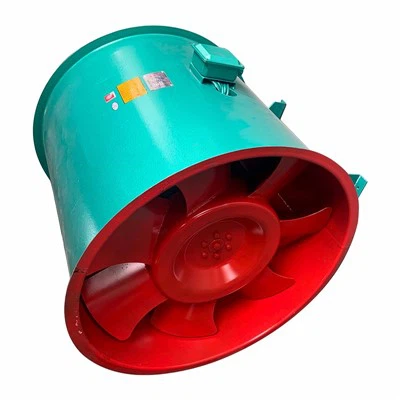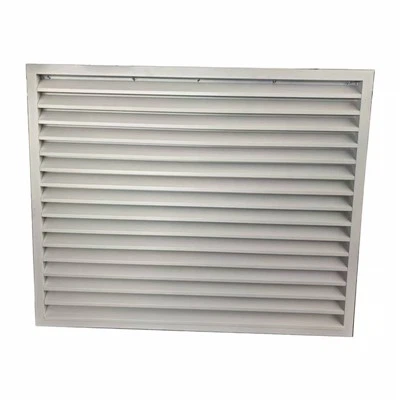

Hey there! As a supplier of Fan Axial Flow, I often get asked about the rotational speed of these fans. So, let's dive right into it and break down what this rotational speed means, how it impacts performance, and why it's crucial for your needs.
First off, what exactly is the rotational speed of a fan axial flow? Simply put, it's the number of revolutions the fan blade makes per unit of time, usually measured in revolutions per minute (RPM). This speed is a key factor in determining how much air the fan can move and at what pressure.
The rotational speed of an axial flow fan has a direct impact on its performance. A higher RPM generally means more air is being moved, which is great for applications where you need a high volume of air circulation. For example, in large industrial settings like warehouses or factories, a high - speed axial flow fan can quickly move air around, helping to maintain a comfortable working environment and prevent the buildup of heat and fumes.
On the other hand, a lower RPM might be more suitable for applications where noise is a concern. In residential settings or quiet office spaces, a fan with a lower rotational speed will still provide adequate air movement but with less noise. This is because as the fan blade spins faster, it creates more turbulence in the air, which in turn generates more noise.
Now, let's talk about how we, as a Fan Axial Flow supplier, ensure that our fans have the right rotational speed for different applications. We use advanced engineering and design techniques to optimize the fan blades. The shape, size, and pitch of the blades all play a role in determining the rotational speed and the amount of air the fan can move.
We also take into account the motor power. A more powerful motor can drive the fan blade at a higher RPM, but it's important to balance this with the overall efficiency of the fan. We don't just want to spin the blade as fast as possible; we want to do it in the most energy - efficient way.
Another factor that affects the rotational speed is the load on the fan. If the fan is working against a high resistance, such as in a duct system with a lot of bends or restrictions, it will need to work harder to maintain the same air flow. In such cases, we might need to adjust the rotational speed to ensure that the fan can still deliver the required performance.

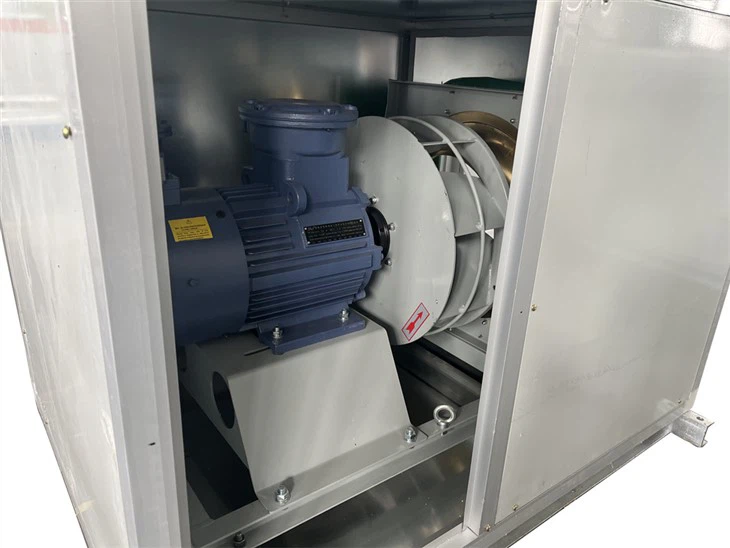
Let's take a look at some of the different types of fans we offer and how their rotational speeds vary.
Our Jet Induced Draft Fan is designed for applications where you need to move a large volume of air over a long distance. These fans typically have a relatively high rotational speed to generate the necessary thrust. They are often used in ventilation systems for large buildings or industrial processes where a strong air flow is required.
The Sidewall Exhaust fans are another popular option. These are usually installed on the side of a building to exhaust hot air or fumes. The rotational speed of these fans can be adjusted depending on the size of the building and the amount of air that needs to be removed. In some cases, a lower RPM might be sufficient, while in larger buildings, a higher speed may be required.
For applications where safety is a top priority, we offer Explosion - proof Centrifugal Fan. These fans are designed to operate in hazardous environments where there is a risk of explosion. The rotational speed of these fans is carefully regulated to ensure that they can operate safely without generating sparks or other ignition sources.
When choosing the right fan for your application, it's important to consider the rotational speed along with other factors such as the size of the space, the type of air flow required, and the noise level. We can help you determine the best fan for your specific needs.
If you're in the market for a Fan Axial Flow, we're here to assist you. Our team of experts has years of experience in the industry and can provide you with all the information you need to make an informed decision. Whether you're looking for a high - speed fan for an industrial application or a quiet, low - speed fan for a residential setting, we've got you covered.
Don't hesitate to reach out to us for a consultation. We can discuss your requirements in detail and recommend the best fan for your situation. We also offer competitive pricing and excellent customer service. So, if you're ready to take the next step and improve your air circulation, let's talk!
In conclusion, the rotational speed of a fan axial flow is a critical factor in its performance. It affects the amount of air that can be moved, the noise level, and the overall efficiency of the fan. As a supplier, we take great care in designing and manufacturing our fans to ensure that they meet the specific needs of our customers. Whether you're in a large industrial facility or a small home, we have the right fan for you.
References
- Fan Engineering Handbook
- Industrial Ventilation Standards
- Air Movement and Control Association Publications