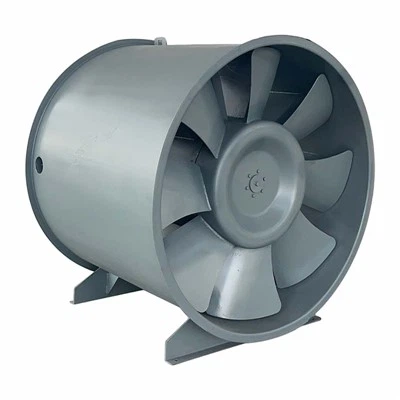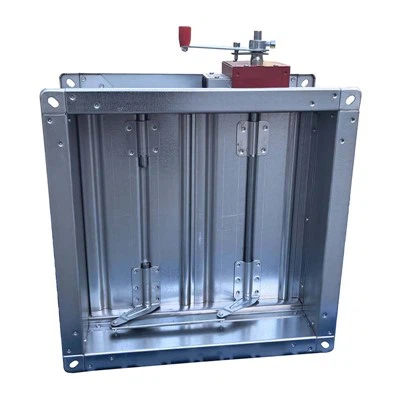

In the realm of industrial ventilation and air movement, axial flow fans play a pivotal role. As a seasoned supplier of Axial Flow Fans, I am often asked about the pressure coefficient of these essential devices. Understanding the pressure coefficient is crucial for engineers, designers, and end - users alike, as it directly impacts the performance and efficiency of axial flow fans.
Definition of Pressure Coefficient
The pressure coefficient of an axial flow fan is a dimensionless number that represents the ratio of the pressure rise generated by the fan to a reference pressure. Mathematically, it is defined as:
[C_p=\frac{p - p_0}{\frac{1}{2}\rho V^2}]
where (C_p) is the pressure coefficient, (p) is the total pressure at the fan outlet, (p_0) is the total pressure at the fan inlet, (\rho) is the density of the fluid (usually air), and (V) is the average velocity of the fluid at the fan inlet.
The pressure coefficient is a key parameter in the design and performance evaluation of axial flow fans. It helps to characterize the fan's ability to generate pressure and is used in conjunction with other parameters such as flow rate, efficiency, and power consumption.
Significance of Pressure Coefficient
The pressure coefficient is a fundamental metric that influences several aspects of an axial flow fan's operation.
Performance Prediction
By knowing the pressure coefficient, engineers can predict the pressure rise that a fan will produce at a given flow rate. This is essential for system design, as it allows for the proper sizing of ducts, filters, and other components in the ventilation system. For example, in a large industrial facility, the pressure coefficient helps determine whether the fan can overcome the resistance of long duct runs and multiple bends to deliver the required airflow.
Efficiency Optimization
The pressure coefficient is also closely related to the efficiency of the fan. Fans with higher pressure coefficients generally require more power to operate. Therefore, finding the optimal pressure coefficient for a specific application is crucial to balance the pressure rise and power consumption. A well - designed fan with an appropriate pressure coefficient can operate more efficiently, reducing energy costs over the long term.
System Compatibility
In a ventilation system, the pressure coefficient of the fan must be compatible with the system's resistance. If the pressure coefficient is too low, the fan may not be able to overcome the system resistance, resulting in insufficient airflow. On the other hand, if the pressure coefficient is too high, the fan may consume excessive power and cause unnecessary noise.
Factors Affecting the Pressure Coefficient
Several factors can influence the pressure coefficient of an axial flow fan.
Blade Design
The shape, angle, and number of blades are critical factors in determining the pressure coefficient. Blades with a higher camber and pitch angle can generate more pressure, but they may also increase the power consumption. The number of blades also affects the pressure coefficient; more blades generally result in a higher pressure rise but may reduce the fan's efficiency at certain flow rates.
Rotational Speed
The rotational speed of the fan has a significant impact on the pressure coefficient. As the rotational speed increases, the pressure coefficient also increases. However, there is a limit to how much the speed can be increased, as excessive speed can lead to increased noise, vibration, and wear on the fan components.
Inlet and Outlet Conditions
The conditions at the fan inlet and outlet, such as the presence of obstructions, duct geometry, and flow uniformity, can affect the pressure coefficient. For example, a non - uniform inlet flow can cause uneven pressure distribution across the fan blades, reducing the overall pressure coefficient.
Applications of Axial Flow Fans with Different Pressure Coefficients
Axial flow fans with different pressure coefficients are used in a wide range of applications.
Low - Pressure Applications
Fans with low pressure coefficients are typically used in applications where the system resistance is relatively low, such as in residential ventilation systems, small - scale industrial cooling, and some agricultural applications. These fans are designed to move large volumes of air at low pressure, providing efficient ventilation with minimal energy consumption. For instance, an Axial Flow Extractor Fan with a low pressure coefficient can be used to remove stale air from a small room or a workshop.
Medium - Pressure Applications
Medium - pressure axial flow fans are commonly used in commercial and industrial settings where the system resistance is moderate. These fans can be found in ventilation systems for office buildings, shopping malls, and light industrial facilities. They are capable of overcoming the resistance of ductwork, filters, and other components to deliver the required airflow.
High - Pressure Applications
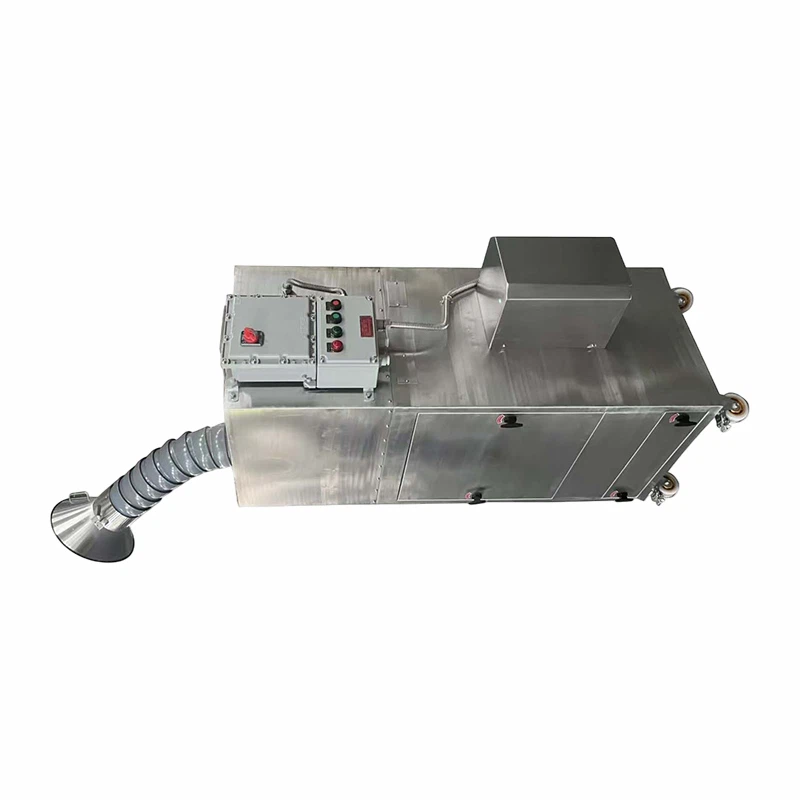
High - pressure axial flow fans are used in applications where the system resistance is high, such as in industrial processes that require the movement of air through long ducts, high - efficiency filters, or in systems with significant pressure drops. For example, an Airborne Dust Collector may require a high - pressure axial flow fan to ensure proper dust collection and ventilation. In some cases, Explosion - proof Centrifugal Fan may also be used in high - pressure and hazardous environments.
Selecting the Right Pressure Coefficient
When selecting an axial flow fan, it is essential to consider the specific requirements of the application. The following steps can help in choosing the right pressure coefficient:
- Determine the System Resistance: Calculate the total resistance of the ventilation system, including the ductwork, filters, and any other components. This will give an idea of the pressure rise required from the fan.
- Consider the Flow Rate: Determine the required flow rate of the system. The pressure coefficient and flow rate are related, and the fan should be selected to provide the desired flow at the appropriate pressure.
- Evaluate Efficiency: Look for a fan with an appropriate pressure coefficient that offers high efficiency. A more efficient fan will consume less energy and reduce operating costs over time.
- Account for Future Expansion: Consider any potential future changes or expansions in the ventilation system. Select a fan with a pressure coefficient that can accommodate these changes without significant modifications.
Conclusion
As a supplier of Axial Flow Fans, I understand the importance of the pressure coefficient in the design and operation of these fans. The pressure coefficient is a critical parameter that affects the performance, efficiency, and compatibility of axial flow fans in various applications. By understanding the factors that influence the pressure coefficient and selecting the right fan for the specific application, engineers and end - users can ensure optimal performance and energy efficiency.
If you are in need of high - quality axial flow fans for your ventilation or air - movement requirements, we are here to assist you. Our team of experts can help you select the right fan with the appropriate pressure coefficient for your specific application. Contact us to start a procurement discussion and find the best solution for your needs.
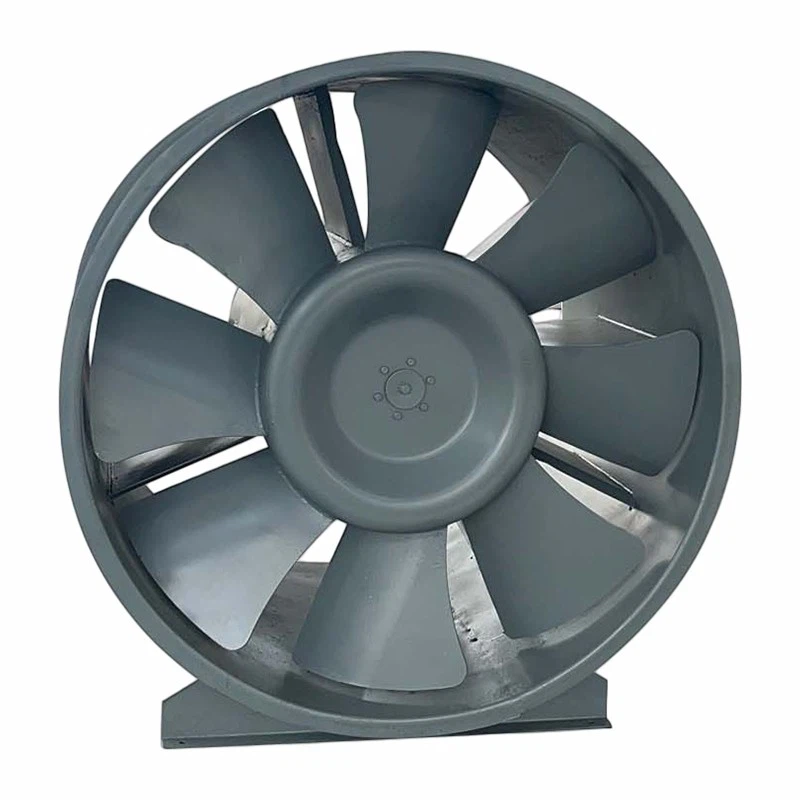
References
- Cohen, H., Rogers, G. F. C., & Saravanamuttoo, H. I. H. (2008). Gas Turbine Theory. Pearson Education.
- Pfleiderer, C. (1982). Fans: A Guide to Their Performance and Design. Springer - Verlag.
- Incropera, F. P., & DeWitt, D. P. (2002). Fundamentals of Heat and Mass Transfer. John Wiley & Sons.