
Hey there! As a supplier of Axial Flow Fans, I often get asked about the power consumption of these fans. So, I thought I'd take a moment to break it down for you.
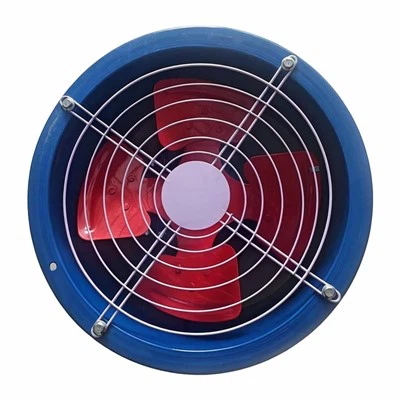
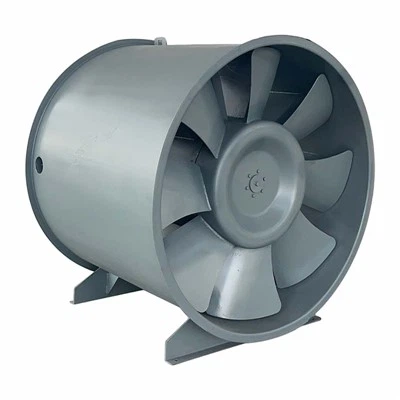
First off, let's understand what axial flow fans are. These fans work by moving air parallel to the shaft around which the blades rotate. They're commonly used in a variety of applications, from cooling electronic equipment to providing ventilation in large industrial spaces.
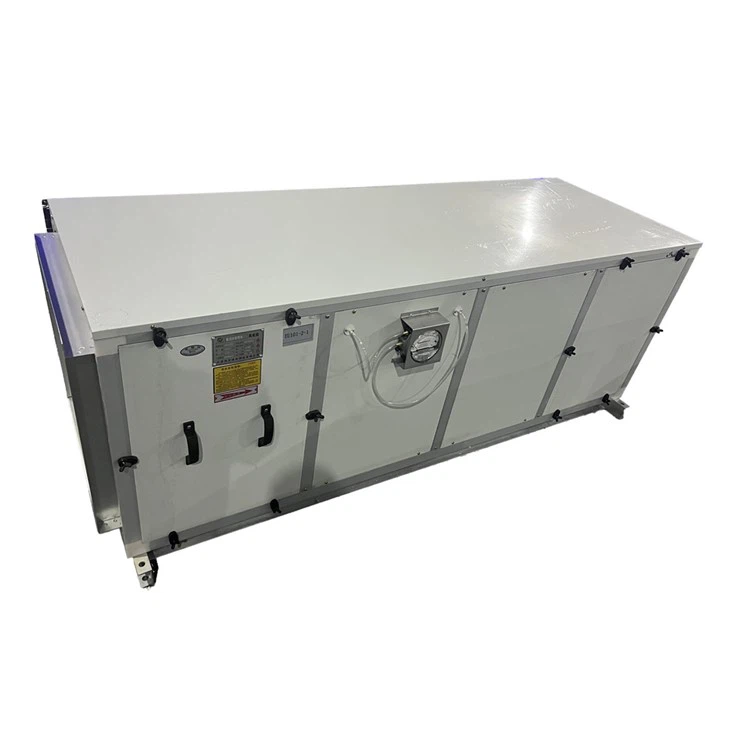

The power consumption of axial flow fans depends on several factors. One of the most significant factors is the size of the fan. Generally, larger fans require more power to operate. This is because they have to move a greater volume of air, which demands more energy. For example, a small axial flow fan used in a computer might consume only a few watts, while a large industrial - scale axial flow fan could use several kilowatts.
Another factor is the fan's speed. The faster the fan rotates, the more power it will consume. Most axial flow fans have adjustable speeds, allowing users to control the airflow and, in turn, the power consumption. If you only need a gentle breeze, running the fan at a lower speed will save energy.
The efficiency of the fan also plays a crucial role. A more efficient fan will use less power to achieve the same level of airflow compared to a less efficient one. When choosing an axial flow fan, it's important to look for models with high - efficiency ratings. This not only helps in reducing energy costs but also has a positive impact on the environment.
Let's talk about some real - world scenarios. In a data center, axial flow fans are used to cool servers. Since data centers operate 24/7, the power consumption of these fans can add up quickly. By using high - efficiency axial flow fans and optimizing their speed based on the server's heat load, data center operators can significantly reduce their energy bills.
In industrial settings, axial flow fans are used for ventilation. For instance, in a factory where there are fumes or heat to be removed, the fans need to work continuously. Selecting the right size and efficiency of the fan can make a big difference in power consumption. If the fan is too large for the space, it will consume more power than necessary. On the other hand, if it's too small, it won't be able to provide adequate ventilation.
Now, let's touch on some related products. If you're in the market for fans with different features, we also offer Explosion - proof Centrifugal Fan. These are designed for environments where there's a risk of explosion, such as in chemical plants or mines. They're built to meet strict safety standards and can handle harsh conditions.
Another option is the Jet Fans for Tunnel Ventilation. These fans are specifically designed for use in tunnels. They help in maintaining proper air circulation, removing pollutants, and providing fresh air to the tunnel environment.
We also have Jet Induced Draft Fan. These fans are used to create a draft in various systems, such as in boilers or industrial furnaces. They can improve the efficiency of these systems by ensuring proper air flow.
So, how can you calculate the power consumption of an axial flow fan? The power consumption (P) can be calculated using the formula P = Q × ΔP / η, where Q is the volume flow rate of the air, ΔP is the pressure difference across the fan, and η is the efficiency of the fan. However, this is a simplified formula, and in real - world applications, other factors like motor efficiency and system losses also need to be considered.
If you're looking to purchase axial flow fans or any of our other fan products, we're here to help. We can provide you with detailed information about the power consumption of different models, as well as advice on which fan is best suited for your specific needs. Whether you're a small business or a large industrial facility, we have the right fan for you.
Don't hesitate to reach out to us for a consultation. We're always happy to discuss your requirements and help you make an informed decision. Whether it's about power consumption, performance, or cost - effectiveness, we've got the expertise to guide you. So, if you're in the market for fans, let's start a conversation and find the perfect solution for you.
References:
- Fan Engineering Handbook
- Industrial Ventilation Standards